
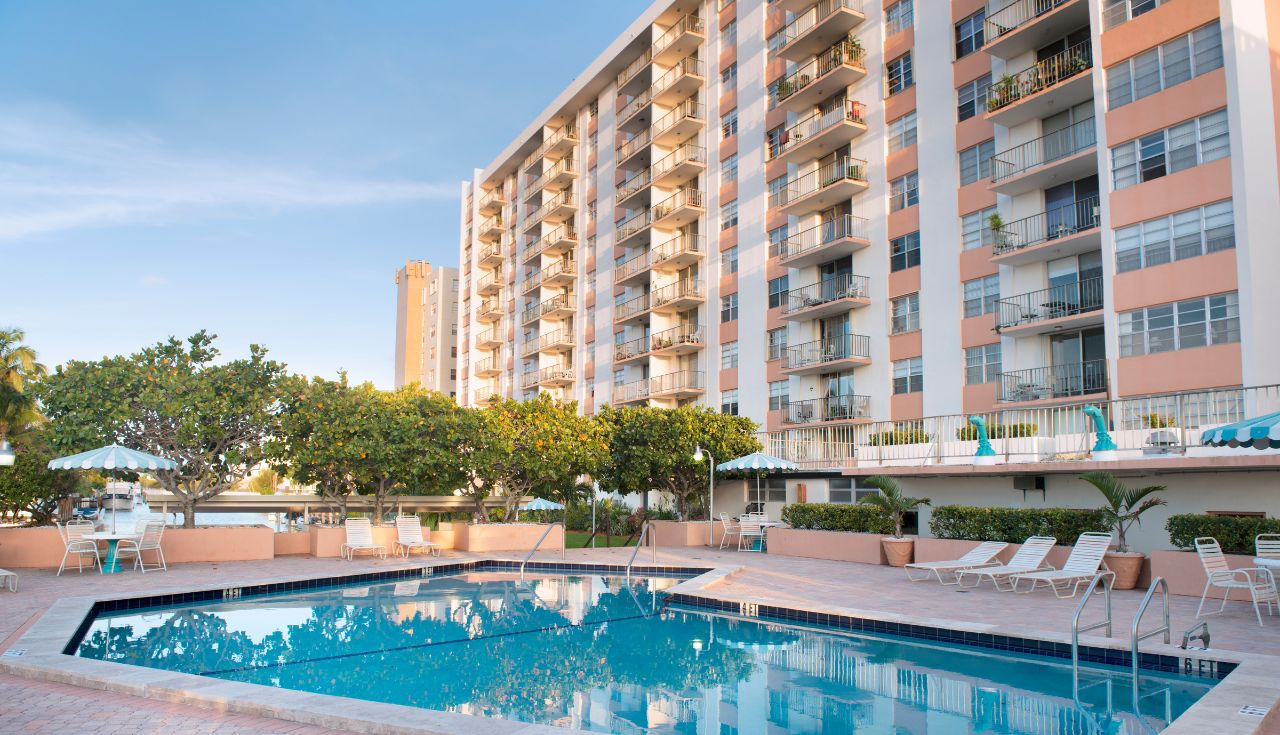
When a borrower finds the perfect condo: located in a desirable neighborhood, priced right, and structurally sound—only to discover their lender won’t touch it, frustration sets in fast. The culprit? Non-warrantable status. This designation doesn’t reflect the property’s quality or safety; it simply means the condo association doesn’t meet the strict eligibility criteria established by Fannie Mae and Freddie Mac.
For brokers, this scenario represents a deal-killer with traditional lenders but a genuine opportunity to partner with LendSure Mortgage Corp and access flexible solutions built specifically for these challenging deals.
Understanding Non-Warrantable Condo Status
Fannie Mae and Freddie Mac set detailed eligibility standards for condo projects. These standards evaluate more than the individual unit—they assess the homeowners association’s structure, financial health, and governance. When a project fails to meet these requirements, it’s classified as non-warrantable, which typically removes access to traditional financing.
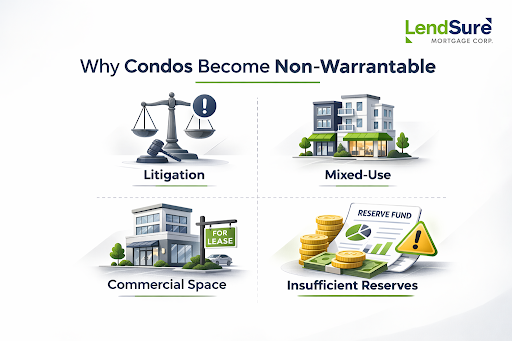
Common Reasons a Condo Becomes Non-Warrantable
Ineligibility often stems from structural factors rather than property quality. Projects may fall outside agency guidelines due to:
- Excessive commercial space beyond allowed thresholds
- Ongoing litigation involving the association
- Mixed-use or unconventional shared-ownership structures
Many of these properties are well-maintained and located in strong markets—they simply don’t fit standardized agency criteria.
Why This Matters for Brokers and Borrowers
For brokers, the key distinction is clarity: the borrower isn’t facing a credit issue or a “problem property.” Instead, it’s a structural classification that blocks traditional agency financing, regardless of how strong the borrower’s financial profile may be.
Why Traditional Financing Falls Short
Conventional lenders operate within strict guidelines set by Fannie Mae and Freddie Mac. These government-sponsored enterprises require condo projects to meet specific eligibility standards before a loan can be approved, purchased, or guaranteed.
If an association falls outside those rules—due to litigation, mixed-use composition, or other structural factors—the lender simply cannot move forward.
Strong Borrowers Can Still Be Declined
This limitation has nothing to do with borrower quality. Even applicants with excellent credit, strong income, and solid assets can be denied if the project itself is non-warrantable. The property’s classification, not the borrower’s profile, becomes the deciding factor.
The Financing Gap This Creates
As a result, a clear market gap emerges. Creditworthy borrowers with legitimate purchase or investment opportunities are effectively locked out of traditional financing. Conventional lenders can’t bridge this gap without violating agency standards, leaving borrowers with only two options: walk away from the property or seek alternative funding solutions.
The Reserve Study Connection: Planning Ahead
For many condo associations, long-term financial planning plays a critical role in operational stability—and sometimes future financing options. Reserve studies are comprehensive financial analyses that project capital needs and outline funding plans for major repairs and improvements. They’ve become standard practice for well-managed associations, and in some jurisdictions, they’re now required by law.
How Financial Governance Affects Financing Conversations
A strong reserve study signals responsible management and long-term planning. While it doesn’t automatically make a project warrantable, a well-funded reserve can improve an association’s financial profile and support financing discussions in non-warrantable scenarios.
What Brokers Should Look For
For brokers working with borrowers in non-warrantable projects, understanding whether an association has an up-to-date reserve study and a realistic funding plan can be valuable. It helps frame qualification conversations, set expectations early, and identify which alternative financing paths may be viable.
How We Fund Non-Warrantable Condos
We recognize that non-warrantable status is a classification issue, not a credit issue. When a borrower is creditworthy and the property is sound, we find a way to say yes. Our approach focuses on the borrower’s financial strength and the property’s real value, not on whether an association meets agency eligibility boxes.
Bank Statement Program for Strong Cash Flow Borrowers
Our Bank Statement Program is ideal for non-warrantable condo buyers. We calculate income using 12 or 24 months of business bank statements, provide pre-qualification within 24 hours, and offer up to 75% LTV for purchases—without relying on tax returns or association eligibility.
DSCR Loans for Investment Properties
For investors, our DSCR Loan Program qualifies borrowers based on the property’s cash flow, not the association’s structure. With lease documentation, we focus on income-generating potential, enabling competitive rates, fast funding, and multi-property financing without warrantability requirements.
Asset Depletion Options for High-Net-Worth Buyers
Our Asset Depletion / Asset Qualifier Program supports high-net-worth borrowers by converting liquid assets into qualifying income over a 60-month draw period. This approach can significantly increase qualifying income while eliminating traditional income documentation and warrantability barriers.
Foreign National Financing Without Agency Restrictions
Even borrowers with international backgrounds aren’t excluded. Our Foreign National Loan Program allows non-U.S. citizens to finance non-warrantable condos using bank statements, CPA letters, or rental cash flow. With up to 75% LTV on purchases and 70% on refinances, international borrowers can invest in U.S. real estate without being blocked by agency eligibility standards.
Why Non-Warrantable Condo Deals Fall Apart
Understanding where deals break down helps brokers prevent surprises. These are the most common issues—and how to stay ahead of them.
Weak or Undocumented Reserves
Associations with low reserves or no reserve study raise underwriting concerns.
Prevent it: Request the latest reserve study early and set expectations—borrower strength can still carry the deal.
Unclear Mixed-Use Percentages
Vague commercial vs. residential breakdowns delay underwriting and appraisals.
Prevent it: Collect formal association documents upfront showing exact usage percentages.
Unresolved or Vague Litigation
Unclear litigation status creates risk and stalls approvals.
Prevent it: Ask for disclosure and supporting documents early so underwriters can assess feasibility.
Appraisal Issues in Specialty Properties
Limited comps often lead to conservative valuations and deal fallout.
Prevent it: Order appraisals early and discuss realistic value expectations upfront.
The Business Case for Non-Warrantable Condo Financing
For brokers, non-warrantable condo borrowers represent a reliable deal flow. These are typically creditworthy clients who have been turned away by traditional lenders—not because they can’t qualify, but because of an administrative classification outside their control. When you can solve that problem, you’ve earned their loyalty and often their referrals.
Additionally, non-warrantable properties exist in every market. Popular urban neighborhoods, coastal communities, and mixed-use developments frequently include buildings that fall outside agency guidelines. This means the opportunity isn’t limited to niche markets—it’s distributed across the geography where your borrowers are searching for homes and investments.
Turning Non-Warrantable into Non-Issue
The non-warrantable condo market represents opportunity, not limitation. Your borrowers deserve financing solutions that reflect their actual financial strength, not administrative classifications they can’t control. When traditional lenders step away from a deal, that’s where we step in.
The next time a borrower discovers their dream condo is non-warrantable, you’ll have a response that goes beyond “sorry, the lender won’t approve it.” You’ll have a partnership that says yes—with competitive rates, flexible terms, and the expertise to make it happen.
Submit the scenario to our team, and let’s discuss how we can turn this obstacle into an advantage for your client and your business.
Frequently Asked Questions
What exactly makes a condo non-warrantable?
Fannie Mae and Freddie Mac publish detailed eligibility criteria. Non-warrantable status typically results from excessive commercial space, active litigation, configurations, or unconventional ownership structures. It’s about the building’s structure or association governance—not the borrower’s creditworthiness or property condition.
How do we identify non-warrantable status early in the process?
Condo questionnaires often flag eligibility issues, and title companies can provide useful information. We recommend discussing warrantability status during the pre-qualification conversation so borrowers understand their financing landscape before investing time in a specific property.
Can a non-warrantable condo ever become warrantable?
Potentially, yes. If an association resolves litigation, adjusts commercial space percentages, or restructures governance to meet agency standards, it may eventually qualify for warrantability. However, this process can take years. In the meantime, alternative financing allows borrowers to purchase immediately.
Are interest rates higher for non-warrantable condos?
We price based on the borrower’s financial profile and the loan structure, not on warrantability status. A creditworthy borrower financing a non-warrantable condo through our Bank Statement or DSCR program can access competitive rates comparable to borrowers in warrantable buildings.
What’s the difference between financing a primary residence versus an investment property in a non-warrantable condo?
Primary residence financing works well through our Bank Statement or Asset Qualifier programs, which focus on personal income and assets. Investment property financing typically leverages our DSCR program, which qualifies based on the property’s rental income rather than personal financial documentation. Both approaches work beautifully for non-warrantable buildings.
Do condotels and hotel-hybrid properties have different or special financing requirements?
Condotels are not non-warrantable condominiums and present different considerations than traditional condos, but we finance them regularly. Our Condotel Loans program is specifically designed for these hybrid properties, offering up to 75% LTV for purchases and competitive rates for investors. The key requirement is that the building has a full kitchen in each unit and doesn’t impose rental pooling mandates.
What happens if the association has litigation or pending legal issues?
Active litigation is one of the primary reasons condos become non-warrantable. We evaluate litigation on a case-by-case basis. Some legal matters are routine and don’t affect financing; others require more careful review. The important thing is transparency—share the details with our team upfront and we’ll give you a straight answer.
Can borrowers with credit challenges still qualify for non-warrantable condo financing?
Our programs are built around alternative qualification methods, which means credit isn’t always the limiting factor that traditional lenders make it. A borrower with solid income (documented through bank statements or DSCR), meaningful assets, or strong cash flow may qualify even if their credit history isn’t pristine. Submit the scenario and let’s explore options.