
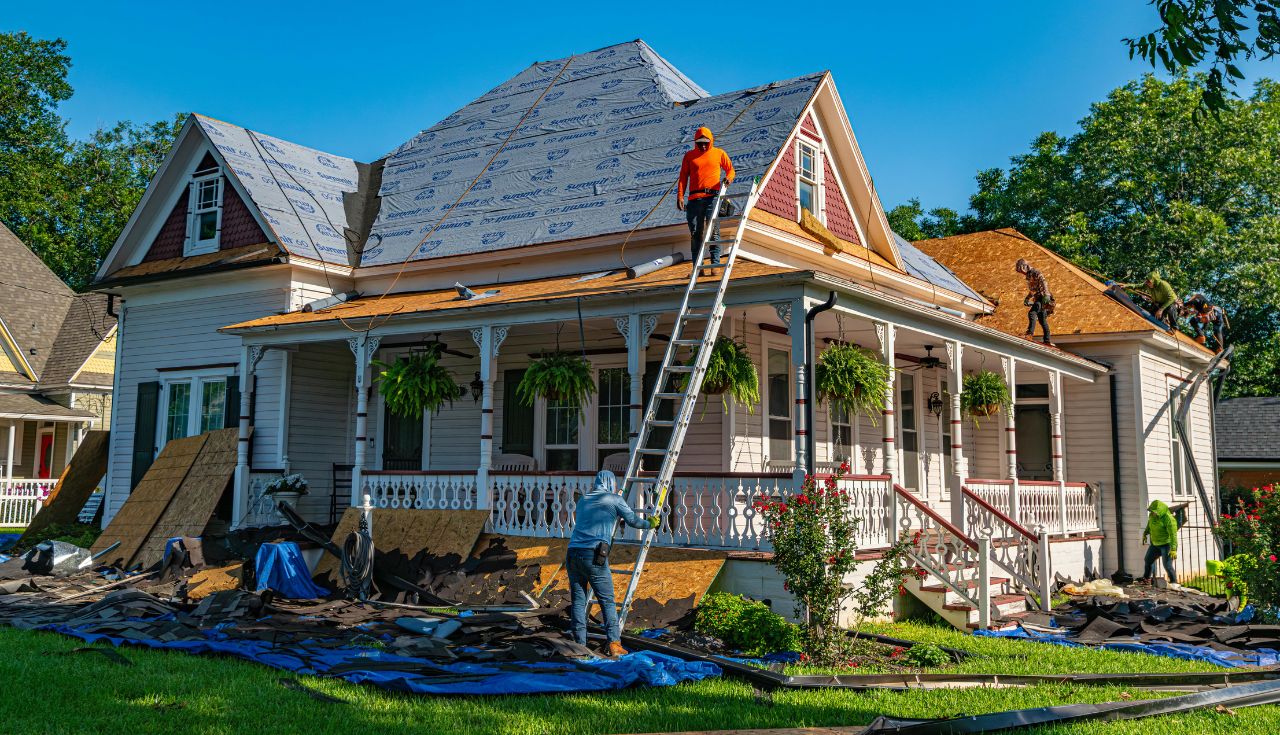
Fix-and-flip financing continues to be one of the strongest growth levers for mortgage brokers looking to diversify revenue and expand into higher-volume client segments.
Recent ATTOM Data shows Q1 2025 flips generated $65k gross profit with ~25% ROI, while 2024 projects averaged $72,000 profit with 29.6% returns. New construction added only 2% to total housing stock from 2020-2022, ensuring ongoing demand for property improvements that fix-and-flip investors provide.
At LendSure, our fix and flip financing program helps brokers in the construction sector through streamlined underwriting, competitive terms, and industry-leading turnaround times. Our approach enables brokers to serve clients that traditional lending often overlooks while building profitable, repeat business relationships.
Understanding fix-and-flip financing opens doors to a client segment that typically completes 3-5 transactions annually, often requiring multiple loan products throughout their investment cycles.
Contact our broker team to discover how our non-QM solutions can enhance your business development strategy.
Webinar: Capitalizing On The Growing Fix and Flip Loan Market
Why Brokers Are Adding Fix-and-Flip to Their Toolkit
Successful flippers complete multiple projects annually, often transitioning between different loan products based on their strategy.
A single investor might use fix-and-flip financing for acquisition and renovation, then DSCR refinancing to convert properties to rentals, followed by bridge loans for rapid subsequent acquisitions.
Geographic flexibility also benefits broker businesses. Unlike owner-occupied lending that requires local market expertise, investment property financing allows brokers to work with clients purchasing in various markets, expanding potential client reach beyond immediate service areas.
LendSure’s Fix-and-Flip Program Advantages
Streamlined Applications and Rapid Turn Times
Our process requires only ~22 data points, rather than the complexity of a full URLA. Investors can even obtain preliminary term sheets before a property is under contract—allowing them to strike quickly as opportunities arise.
Experience-Based Pricing That Rewards Growth
- First-time investors: 25% down, 75% rehab financing
- Experienced investors (3+ flips): 15% down, up to 100% rehab financing
This tiered structure aligns pricing with risk while supporting investor progression.
Experience-based pricing rewards seasoned investors while accommodating newcomers. First-time investors qualify for 25% down with 75% rehab financing, while experienced investors (3+ flips) can access 15% down with up to 100% rehab financing. This tiered structure supports client growth while managing portfolio risk.
Our loan structure eliminates common traditional lending obstacles. Interest-only payments for 12-month terms provide cash flow advantages during renovation periods. No income verification, DTI calculations, or TRID requirements streamline approval processes. No prepayment penalties encourage quick project completion and refinancing opportunities.
The draw process supports project management while protecting all parties. Rehab funds disburse upon completion verification rather than at closing, ensuring renovation progress aligns with fund availability. $150 inspection fees provide professional oversight while maintaining reasonable cost structures.
Where Brokers Fit Into the 2026 Flip Growth Cycle
Fix-and-flip isn’t a one-and-done transaction. Investors move through predictable phases in their investment cycle, and each phase requires a different loan product. When brokers understand this cycle, they stop seeing themselves as deal processors and start operating as long-term strategic partners.
To simplify this model, here’s the Broker Opportunity Triangle — a visual framework that demonstrates how a single investor can convert into multiple closings per year.
The Broker Opportunity Triangle
- Acquisition Financing: Fix & Flip Loans This is the entry point for most investors. Fix-and-flip loans provide:
- Fast access to capital
- High leverage on rehab funds
- Flexible underwriting
- No income documentation
Investors use this loan to acquire the property and complete renovations. Because these projects often last 3–6 months, brokers can expect rapid loan turnover and repeat cycles.
- Stabilization Financing: DSCR Refinance Once the project is complete, many investors choose to hold the property as a rental instead of selling. This is where brokers generate a second transaction:
- The Fix & Flip loan is paid off
- A DSCR (Debt-Service-Coverage-Ratio) loan replaces it
- No seasoning issues when using the same lender
- Borrower locks in long-term, passive-income financing
This “Fix → Refi → Rent” cycle is especially popular in 2026 as investors diversify beyond resale-only strategies.
- Portfolio Expansion: Bridge or Ground-Up Loans Successful investors rarely stop at one project. After the DSCR refinance frees up capital, they often move directly into:
- Bridge loans for fast acquisitions
- Ground-up construction loans for small builder opportunities
- Second fix-and-flip projects using seasoned experience
These products give brokers additional transactions per client, often within the same 12–18 month period.
Bridge financing serves investors needing rapid acquisition capability. BOOST Bridge loans offer no monthly payments for up to 12 months, enabling investors to purchase before selling existing properties. This product particularly benefits active investors managing multiple projects simultaneously.
Ground-up construction loans expand opportunities for small-volume builders completing 1-4 homes annually. Up to 60% lot financing and 80-82% construction cost coverage serve clients traditional banks often overlook due to volume requirements.
Client lifecycle management becomes crucial for maximizing relationship value. Tracking project timelines, exit strategy preferences, and portfolio growth helps brokers anticipate future financing needs and maintain regular client contact throughout investment cycles.
Competitive Advantages for Brokers
Fix-and-flip financing offers distinct advantages over traditional owner-occupied lending that directly translate to improved broker business metrics and operational efficiency.
Streamlined Regulatory Environment
- No TRID requirements: Eliminates 3-day disclosure periods and complex timing coordination
- No income qualification: Removes employment verification, tax return analysis, and DTI calculations
- Business purpose lending: Avoids consumer mortgage regulations and associated compliance burdens
Accelerated Transaction Cycles
- Faster cycle time: 15-21 day typical closings versus 30-45 days for conventional loans
- More commissions per year: Repeat clients completing 3-5 annual transactions
- Predictable pipeline: Project-based lending creates forecastable business volume
Enhanced Operational Flexibility
- No EPO risk: Clients can refinance or sell without early payoff penalties
- Geographic flexibility: Investment properties allow brokers to originate nationally
- Portfolio diversification: Reduces dependence on local residential market conditions
Superior Client Economics
- Higher loan amounts: Investment properties typically $200K-$800K+ versus residential averages
- Repeat business model: Single clients generate multiple annual transactions
- Cross-selling opportunities: Natural progression through multiple loan products
This combination of regulatory simplicity, operational efficiency, and enhanced profitability makes fix-and-flip financing an attractive diversification strategy for brokers seeking to optimize their business models.
Qualification Guidelines and Documentation
Credit requirements remain accessible while maintaining prudent standards. Minimum 660 FICO scores with six months reserves create reasonable qualification thresholds. Reserve requirements can include retirement accounts, providing flexibility for investors with diverse asset profiles.
Required documentation focuses on deal viability rather than traditional employment verification. Credit reports, asset documentation, government ID, and LLC formation documents comprise core requirements. Experience forms help establish pricing tiers while purchase contracts and renovation scopes guide underwriting decisions.
Property eligibility covers standard investment opportunities while excluding problematic categories. Single-family residences and 2-4 unit properties qualify along with condominiums including non-warrantable types. Manufactured homes and mixed-use properties remain excluded due to appraisal and resale complexities.
Timeline expectations support investor business models. Pre-qualification typically completes within 1-2 business days, with standard closings occurring in 15-21 days. Rush closings accommodate time-sensitive opportunities in 7-8 days when necessary, providing competitive advantages in multiple-offer situations.
Build Your Pipeline
The fix-and-flip market is an essential component of the housing ecosystem that positions brokers as strategic partners rather than transaction processors. By offering these specialized loan products, you’re providing investors with the capital they need to generate wealth while securing a pipeline of high-velocity, repeat business for your practice.
Ready to transform your business model? Our broker support team provides comprehensive training on guidelines, market development strategies, and client lifecycle management to maximize your success in this growing segment. Contact our broker team today to discover how LendSure’s fix-and-flip financing can build your pipeline and create sustainable competitive advantages in 2025 and beyond.
Fix-and-Flip FAQ
What credit score do fix-and-flip borrowers need?
The minimum qualifying score is 660 FICO, which keeps the program accessible while maintaining responsible lending standards. Borrowers with scores near the minimum may be asked to show stronger reserves or a more conservative deal structure.
Exceptions may be possible when compensating factors exist—such as significant renovation experience, strong liquidity, a history of successful flips, or a low leverage request. Experienced investors with well-documented track records often qualify for more favorable pricing even if their FICO score is slightly lower than ideal.
How quickly can we close these loans?
Standard closing timelines range from 15–21 days, depending on appraisal scheduling, title work, and the complexity of the renovation scope.
For competitive market situations, rush closings are available in 7–8 days, allowing investors to compete with cash buyers. Rush files typically require
- completed scope of work,
- project budget, and
- fast document delivery by the borrower.
Because these files avoid TRID requirements, the overall workflow is streamlined compared to traditional residential lending.
Do borrowers need the property under contract for pre-approval?
No. We can issue preliminary term sheets without an executed purchase contract, giving investors a major advantage when scouting deals.
Early term sheets help borrowers:
- evaluate multiple potential properties,
- negotiate more confidently with sellers,
- demonstrate financing readiness to agents, and
- act quickly when the right project appears.
A formal approval and underwriting review occur once the borrower submits the purchase contract and full renovation scope.
Q: What’s the maximum loan amount for fix-and-flip projects?
Financing typically covers up to 85% of the purchase price and up to 100% of rehab costs, depending on borrower experience and deal strength.
Total leverage is capped at 70% of the after-repair value (ARV) to ensure the project maintains healthy exit equity.
Seasoned investors with multiple successful flips may receive more flexible structures, while first-time flippers may see slightly lower leverage to offset risk. Maximum loan amounts vary by project type, location, and investor capacity but generally support both entry-level and high-value rehab projects.
Can first-time flippers qualify for these programs?
Yes. We actively support first-time investors with competitive terms designed for new entrants to the market.
Typical first-time structures include:
- 25% down on the purchase,
- 75% rehab financing, and
- interest-only payments during the renovation period.
As borrowers complete successful projects, pricing improves and leverage increases—often allowing as low as 15% down with up to 100% rehab financing after 3+ documented flips.
Questions about specific scenarios or guidelines?
Our experienced underwriting team is here to help you evaluate deals and guide your clients through the process. We won’t hesitate to answer your questions—whether it’s about a unique property type, complex renovation scope, or borrower situation that doesn’t fit standard guidelines.
Contact us today and let’s discuss how LendSure can support your fix-and-flip business development goals.