
Smart tax planning means minimizing taxable income, which is exactly why tax returns rarely capture a self-employed borrower’s full financial picture. Our Bank Statement Mortgage program is built around how your clients actually earn, not how the IRS sees it.
If your client’s deposits tell a better story than their tax return, we want to see them. Submit your scenario and our team will provide an upfront income evaluation — no full file required.


BEYOND TAX RETURNS
This program is designed for self-employed borrowers, which may include:
- Clients who recently transitioned from W-2 employment to running their own business
- Those with multiple income streams
- High-commission salespeople whose write-offs work against them at conventional lenders

Program Highlights
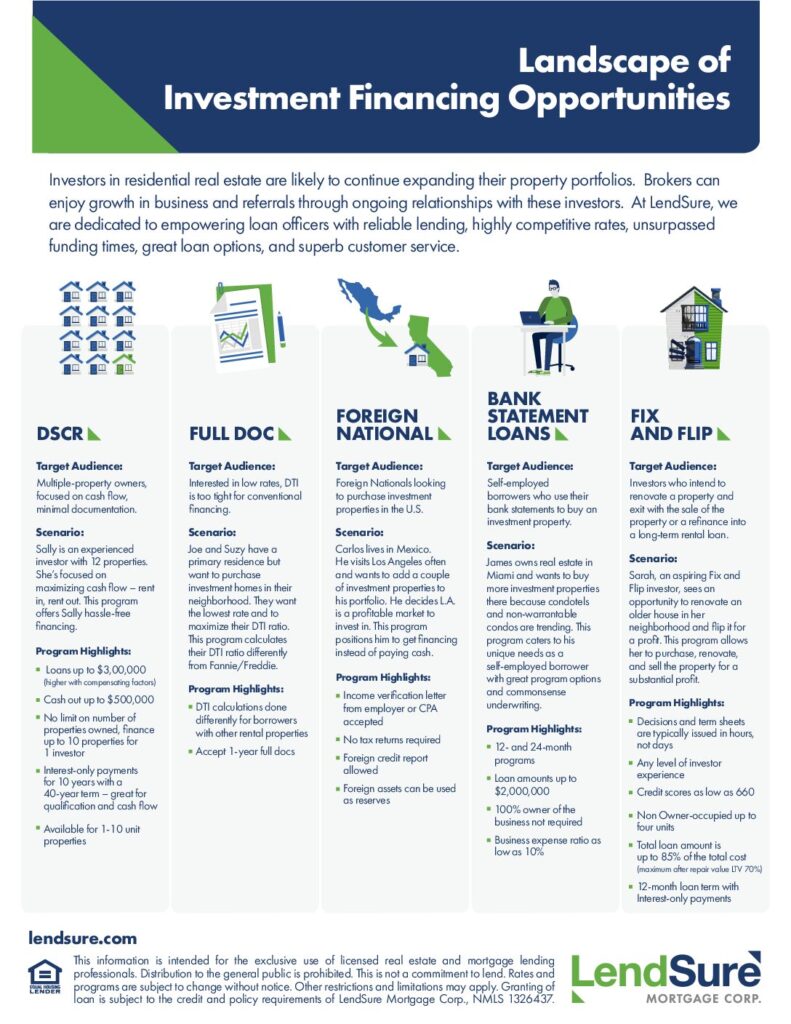
- Loan amounts up to $3,500,000
- LTV up to 90%
- 12 or 24 months of personal or business bank statements
- Variable expense factor — as low as 10% for low-overhead businesses
- As little as 25% business ownership required to use business income
- Multiple business accounts accepted; business and personal accounts can be combined
- W-2 income can be blended with bank statement income
- Asset depletion income can be layered in alongside bank statement income
- Venmo and Zelle deposits considered when tied to the business
- NSFs reviewed in context — not an automatic disqualifier
- CPA letter and P&L statements not required
- No one-size-fits-all income calculation
Income Calculations
Most bank statement programs apply a flat expense reduction to gross business deposits regardless of what the business costs to run. A software consultant working from a home office and a general contractor running heavy equipment have very different overhead, and a flat factor treats them the same.
If a borrower pays themselves from their business into a personal account, we can qualify using the personal bank statements, confirmed by three months of business statements showing the transfers. For borrowers who need a lower expense factor than our standard, a CPA-prepared letter can support that request.
Income stacking is also available. Bank statement income, W-2 income, asset depletion, social security, and rental income can all be combined into a single qualifying figure when multiple streams exist.
Ready to Submit a Scenario?
You don’t need a full file to get started. Send over the bank statements and our team will provide an upfront income evaluation and give you a clear picture of what the borrower may qualify for.
Submit your loan scenario or become an approved broker to access our full product suite.
SCENARIOS AND FAQs
Does the borrower have to own the business outright?
No. Borrowers need to hold at least 25% ownership in the business to use that business income for qualification.
What if the borrower just became self-employed?
Recent transitions from W-2 employment to self-employment in the same field may still qualify. We can use available months of bank statements alongside prior W-2 income history to build the income picture.
Are Venmo and Zelle deposits usable?
Yes, when those deposits can be tied to the borrower’s business. We verify online presence and may ask for a sample of invoices — not a receipt for every single deposit.
What if the bank statements show NSFs?
NSFs are not an automatic disqualifier. We look at the full context — whether bills are being paid on time, whether there’s a logical explanation for the activity, and whether cash flow overall is stable. Each situation is reviewed on its own merits.
Is a CPA letter or P&L required?
No. A short one-page self-employment questionnaire covers the business basics. A CPA letter is only needed in specific situations — typically to support a below-standard expense factor or to verify two-year self-employment history when it can’t be confirmed online.
Can multiple business accounts be used?
Yes. Deposits from multiple business accounts can all be considered. When a borrower owns separate businesses with separate accounts, each account is evaluated individually.
Can broker compensation be financed into the loan?
Yes. Through our stacking feature, broker origination and discount points can be financed into the loan on all programs — owner and non-owner occupied — without increasing the rate.
What’s the difference between 12 and 24 months?
Today there’s no meaningful pricing difference between the two. Providing 24 months of statements strengthens a file and can serve as a compensating factor when other elements of the loan need additional support.


May 19, 2026
WEBINAR: Bank Statement Loans for Today's Economy
Self-employed borrowers are everywhere. The number of freelancers in the United States is …
Read More
September 27, 2024
Bank Statement Loans: A Solution For Self-Employed Borrowers
https://youtu.be/CGFZJwGMoqg?si=12gnKOrhexiQBJY0…
Read More


July 18, 2019
Everything You Need to Know About Investment Property Loans
Did you know that providing one investment property loan can mean a steady stream of purc…
Read More